

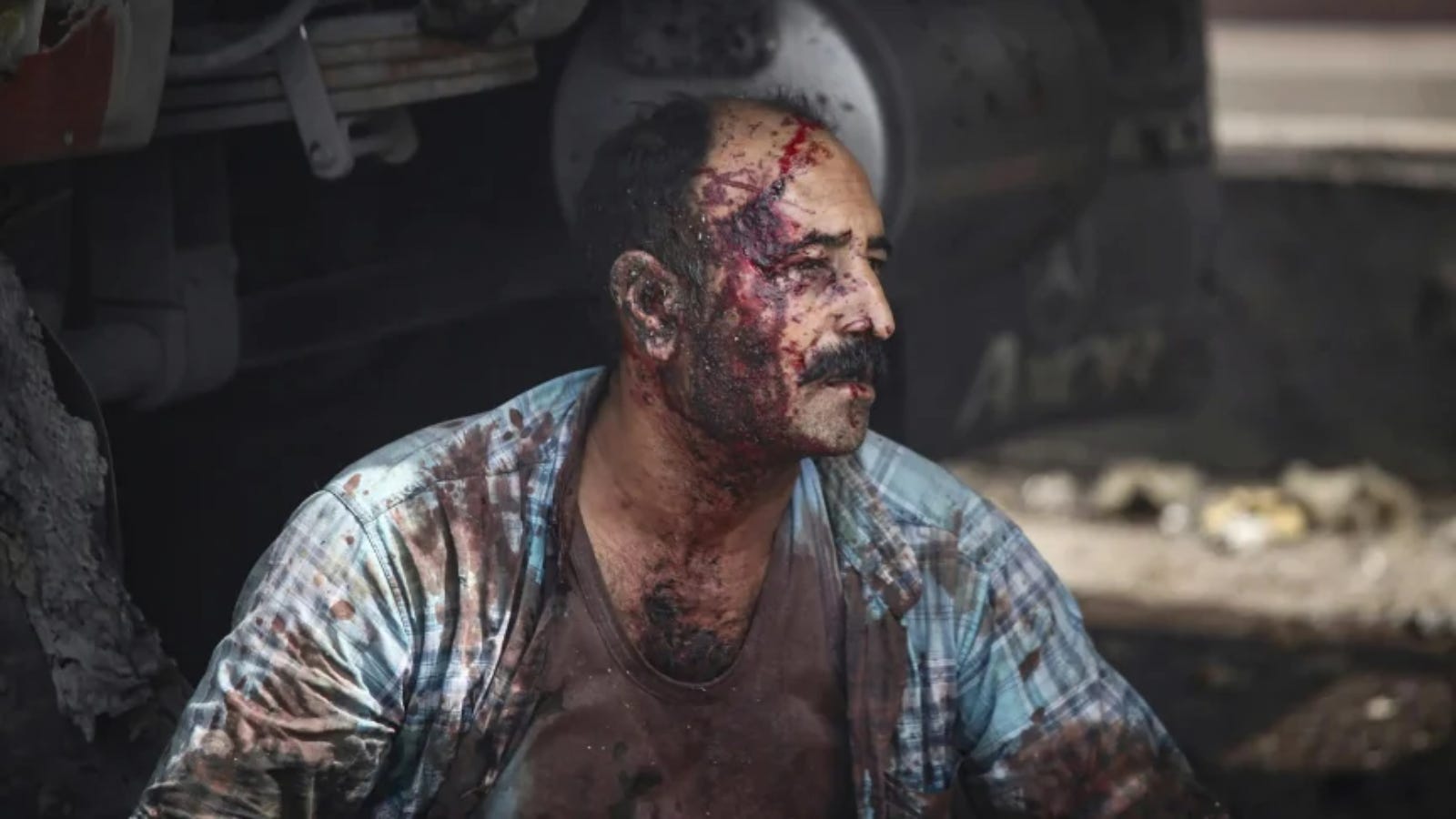
A massive explosion tore through Iran’s largest commercial port on Saturday, killing at least 70 people and wounding over 1200 others, state media reported.
The number of fatalities has been rising, and the head of Iran’s Red Crescent said that more bodies are expected to be found among the containers and that DNA testing is needed to identify some victims.
The blast occurred at Shaheed Rajaei Port in southern Iran’s Bandar Abbas city near the Strait of Hormuz, through which a fifth of the world’s oil output passes. It was felt by residents up to 50 km away, shattering their windows and cars.
“Someone is sitting near the port with a handheld loudspeaker, reading out the names of the wounded. It’s apocalyptic. People are angry and worried,” an eyewitness told IranWire.
Fires continued to break out in different parts of the affected area, with helicopters and firefighters working to extinguish them until Monday. The explosion occurred as Iranian and U.S. negotiators met in Oman for a third round of talks over Tehran’s nuclear program.
“I personally knew two people who went missing. One body has been identified; the other is still missing. Most of the missing were contract workers not officially listed anywhere,” said Marzieh, a local resident.


DNA Testing Needed to Identify Victims
Authorities have said that DNA testing is required to identify some victims of the port explosion due to the severity of injuries.
Hundreds of people are searching for missing loved ones, posting appeals on social media, and checking hospitals in hopes of finding them.
“Several honorable doctors and nurses are posting the names of the injured admitted to their hospitals on their Instagram accounts and profiles. Even this simple information isn’t being provided by the government. The burden falls on the shoulders of grieving and afflicted people,” a local resident told IranWire.
Authorities said some victims have been identified through “recognizable faces and available photos,” but families of missing victims have been urged to contact the forensic medicine office.
“In those terrifying moments, we had to pay for X-rays and bandaging ourselves, despite the urgent situation and lack of companions. Later, the hospital became so crowded that they placed another patient on my bed,” said Hooman, who was a kilometer from the blast and was hurled across a warehouse, suffering glass injuries that required stitches. Heavy traffic delayed his arrival at the hospital, where he was shocked that patients were charged despite the chaos.
On Sunday, authorities ordered all schools and offices in the area to close and urged residents to stay indoors. The Ministry of Health warned of dangerously high levels of ammonia, sulfur dioxide, and nitrogen dioxide throughout the city.
The families of missing victims are enduring painful and uncertain days as they look for their loved ones.
“My partner works at the Persian Gulf oil refinery. Today, they told everyone they have to come to work, and they don’t care at all about people’s lives. They’re giving no explanation to the public about the air pollution or the need to wear masks. I was outside for just five minutes, and my throat started burning,” a user posted on social media.
Residents reported feeling the impact of the blast up to 50km (31 miles) away. It blew out windows and roofs of nearby buildings and destroyed cars.
During a mourning ceremony in Bandar Abbas on Monday, some families of the port explosion victims expressed anger over officials' lack of transparency. A woman was filmed in a video calling on officials to resign: “Put yourself in the place of that child waiting for their parents. Incompetent officials, resign! Resign!”
What caused the explosion?
Chemicals at the port are suspected of fueling the explosion, but the exact cause has not been confirmed yet.
A spokesperson for the country’s crisis management organization appeared on Saturday to blame the explosion on poor storage of chemicals in containers, adding that the Director General of Crisis Management had earlier warned of potential danger.
On Sunday, The New York Times reported “a person with ties to Iran’s Islamic Revolutionary Guard Corps said that what exploded was sodium perchlorate, a major ingredient in solid fuel for missiles. The person spoke on condition of anonymity to discuss security matters.”
The Associated Press, citing British security firm Ambrey, reported “the port received missile fuel chemical in March. It was part of a shipment of ammonium perchlorate from China by two vessels to Iran, first reported in January by the Financial Times.”
In response, Iran’s Defense Ministry spokesman on Sunday denied that missile fuel chemical had been imported through the port. However, ship-tracking data reviewed by the AP confirmed that a vessel suspected of transporting the chemical was present in the area in March.
On Monday, a committee investigating the explosions stated that “negligence in observing safety protocols and passive defense measures has been confirmed.” Adding that “determining the definitive cause of the incident requires a thorough and comprehensive investigation.”
Interior Minister Eskandar Momeni told state television on Monday that “culprits have been identified and summoned,” without providing details.
Iran’s ISNA news agency deleted a report just hours after publishing it, which quoted Iran’s Customs Administration as saying the cargo that caused the deadly port explosion and massive fire had not been under customs control and lacked a declaration and registration number. ISNA has not explained the deletion.
Suppressing Information?
Tehran’s Prosecutor’s Office has filed criminal charges against several media outlets and social media activists over their reporting of the port explosion. Authorities warned others against publishing content that could “disturb the psychological security of society.”
The crackdown follows growing public frustration over limited official information after the blast.
Iran has a long history of restricting press freedom, especially during times of crisis. Authorities frequently target independent journalists and outlets for reporting that contradict or challenge official narratives.
“The Shahid Rajaee Port is as large as a city, and more than 7,000 workers are employed there. Unfortunately, 99% of the victims were workers. We had repeatedly warned before that more attention must be paid to the safety of port workers, but our voices were not heard.
“There are workers here who don’t even have proper shoes or safety helmets; the work environment is unsafe. It’s heartbreaking to see such incidents happen — why must workers who are just struggling to earn a piece of bread be sacrificed like this? What crime have they committed?” said Arsalan Heydari, labor activist and head of the Bandar Abbas Workers' Retirees Association.
Workers Trapped in Cycle of Negligence & Impunity
Iran has a longstanding pattern of industrial disasters followed by hollow investigations and a lack of meaningful reforms. Despite recurring tragedies, official responses are typically superficial—marked by high-profile visits, vague statements, and promises of inquiries that rarely result in accountability or improved safety for workers.
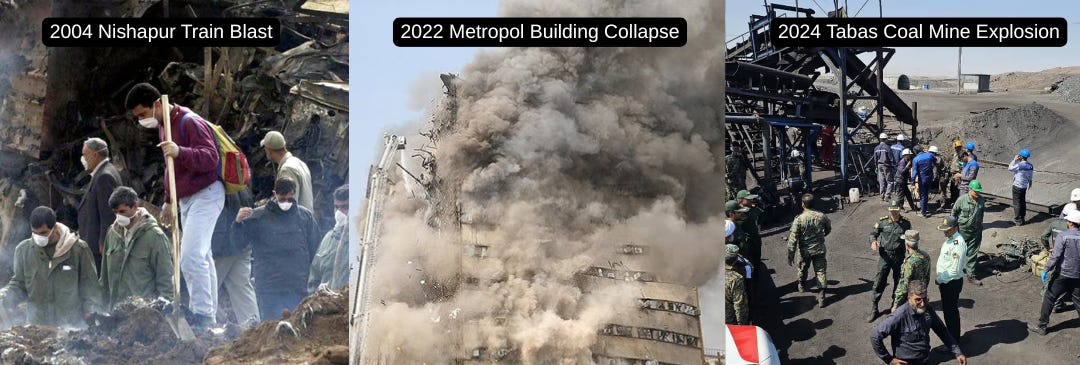
Authorities frequently suppress information, issue conflicting explanations, and discourage independent oversight. This enables preventable disasters to recur, often with devastating human and environmental consequences.
Between May 2024 and April 2025, at least 2,079 workers reportedly lost their lives, and over 16,000 others were injured in Iran due to inadequate safety standards and the state’s systematic failure to protect laborers.
Independent unions aren’t recognized in Iran, and for decades, labor rights activists have faced imprisonment, surveillance, and abuse simply for demanding safer workplaces and basic labor protections.
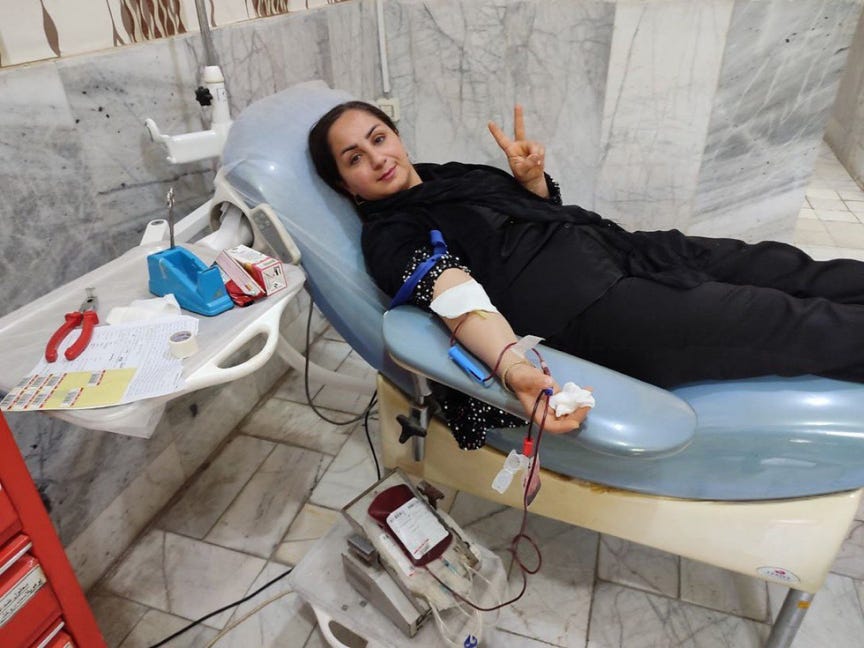
Hospitals in Bandar Abbas urgently called for blood donations, prompting many citizens to line up at health centers. A widely shared photo showed Mahmonir Molaei-Rad, mother of Kian Pirfalak, the 9-year-old killed by security forces during the Women, Life, Freedom protests, donating blood.