



From Egypt and Jordan to the United Arab Emirates and Iran, women and girls continue to face deadly violence at the hands of men, often after rejecting marriage proposals, seeking independence, or attempting to escape abusive relationships.
In Egypt, 21-year-old Naira Ashraf was stabbed to death outside her university after rejecting a fellow student’s marriage proposal. Days later, 21-year-old Iman Rashid was shot dead at her university in Jordan. In the United Arab Emirates, Lubna Mansour was brutally stabbed to death by her husband. And in Iran, 16-year-old Ariana Lashkari was killed by her father after, according to a relative, she sought to “live without restrictions.”
These killings occurred in different countries and under different circumstances, but they expose a common and devastating reality: women and girls can face violence from the men closest to them while the systems meant to protect them fail to provide adequate protection or accountability. In some cases, victims had been threatened before they were killed.

Naira Ashraf, a 21-year-old student, was brutally killed on Monday, June 20, 2022, in front of her university in northern Egypt. Ashraf was stabbed several times in broad daylight, including on her neck and chest, by a fellow student.
According to the prosecutor’s office, the suspect Mohamed Adel, who is accused of premeditated murder, will be detained for four days while an investigation is underway. Adel confessed to the killing, saying Ashraf had blocked him on social media and rejected his marriage proposal.
In a TV interview, the victim’s father revealed that the suspect had threatened Ashraf multiple times, and they had reported these threats to the police. According to the prosecutor’s office, the family had also requested a restraining order against him more than two months ago. Viral footage of the murder has sparked widespread outrage, with many people condemning Egyptian law enforcement and bystanders for failing to protect her.

Salma Bahgat, a 20-year-old Egyptian woman, was stabbed 17 times on Tuesday, August 9, 2022, in the city of Zagazig, northeast of Cairo. Bahgat was a media student at Al-Shorouk Academy.
Police arrested the suspect, Eslam Mohammed, at the scene. According to local media, he confessed to committing the killing “out of revenge”. After the killing, he took photos of her dead body. At least five eyewitnesses said they saw the accused stab Bahgat to death, according to prosecutors.
According to prosecutors, Mohammed, 22, had made death threats against Bahgat for declining his marriage proposals twice. The victim’s parents told the authorities that Mohammed’s proposals were rejected because of his “misbehavior and drug abuse.”
Before the killing, Mohammed threatened Bahgat with an “ugly end” and posted several pictures of them together online. He had two tattoos with the name “Salma” and reportedly published a picture of the back of his hand bleeding, saying: “I wrote her name with fire so my love for her will not be extinguished.”
In a statement released Tuesday evening, Al-Shorouk Academy mourned Bahgat's death: “She was an example of a diligent and distinguished student, on the moral and scientific levels, throughout her four years at the academy.”
The Observatory of Crimes of Violence against Women in Egypt recorded more than 800 cases against women last year, nearly double compared with the previous year.
The number of incidents is likely to be much higher as women tend not to report to the police. Human rights groups have consistently criticized Egyptian authorities for failing to protect women.
Amnesty International has criticized Egyptian authorities for failing “to prevent and investigate widespread violence against women and girls.”
A United Nations survey conducted in 2015 found that around 7.8 million women in Egypt suffer from all forms of violence yearly, “whether perpetrated by a spouse/fiancé or individuals in her close circles or from strangers in public places.”
A 2013 UN study revealed:
99.3% of Egyptian girls and women surveyed reported experiencing some form of sexual harassment in their lifetime.
82.6% did not feel safe or secure in the street.
86.5% did not feel safe in public transportation.
A study by the NCW found that less than 1% of Egyptian women report incidents or seek help.

Iman Rashid, 21, was shot dead at her university in Jordan last Thursday. The killer’s motives were not immediately clear. The alleged suspect shot himself when surrounded by the police on Sunday.
An unverified image shared online of a text message allegedly sent to Rashid before her killing cited the Egyptian student’s fatal stabbing and said: “Tomorrow I’ll come to speak to you, and if you refuse, I will murder you like the Egyptian man who killed the girl yesterday.”
“Honor” killings are often treated more leniently under Jordanian law. Article 340 allows reduced penalties when a man kills or attacks his wife or a female relative after allegedly finding her committing adultery or in an “unlawful bed.”
Although Article 98 was amended in 2017 to bar the “fit of fury” defense for crimes against women, courts have continued to reduce sentences under Article 99, which allows mitigation when a victim’s family waives its right to pursue a complaint. Human Rights Watch has reported that this provision has been used in “honor” killing cases, where family members may themselves be complicit in the killing.

Lubna Mansour, a Palestinian-Jordanian engineering graduate, was brutally stabbed to death by her husband in Sharjah, United Arab Emirates. Sharjah Police found Lubna’s body stabbed 15 times in her car and arrested the suspect within two hours of the killing. They said CCTV footage showed the suspect fleeing the scene in the victim’s car.
The suspect confessed to the murder, pointing to “personal disputes.” Lubna’s murder occurred only days after two students were killed by men in Egypt and Jordan.
According to Human Rights Watch, the UAE’s domestic violence law, which came into effect in 2020, included provisions allowing women to obtain restraining orders against abusers.
“However, the law’s definition of domestic violence reinforces male guardians’ ability to discipline their wives, female relatives, and children to an extent that authorities find acceptable. The law also does not criminalize marital rape,” said HRW.
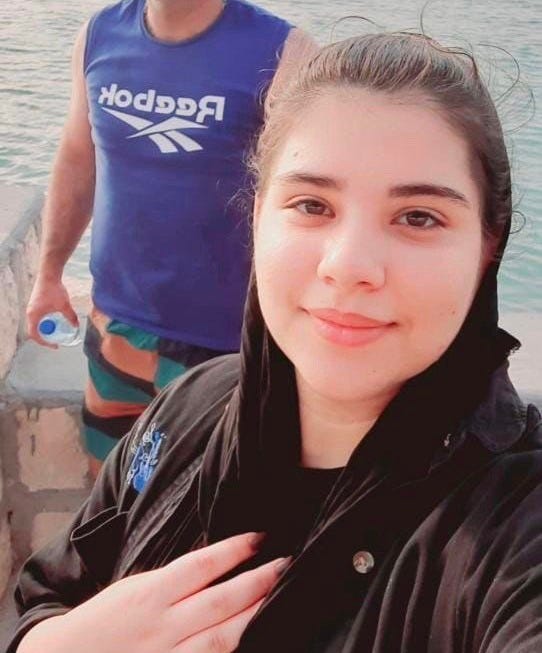
Ariana Lashkari, a 16-year-old girl, was killed with a hunting shotgun by her father on Monday, June 27, 2022, in the southwestern Fars province of Iran.
After his arrest, the father confessed, saying: “Following a dispute, Ariana went to my mother’s house and I suddenly could not control my anger and went there with my shotgun to scare her. I did not really intend to kill my daughter, but I fired involuntarily.”
However, according to a relative of Ariana, she was killed because “she wanted to live without restrictions and because of family gossip.”
According to Human Rights Watch, “under Iranian law, intentional murder is punishable by death unless the family of the victim forgives the killer. The law, however, provides that if a father or paternal grandfather kills his child or grandchild, his sentence is reduced to up to 10 years.” Mothers do not receive the same exemption and can face execution for killing their children.
The disparity extends to women who kill abusive husbands. Women who kill their husbands, often as a last resort to escape abuse, can face the death penalty, while Iranian law provides limited legal protection for women experiencing domestic violence. Iran has no comprehensive domestic-violence law to prevent abuse and protect survivors, according to Human Rights Watch.
Capital punishment is inherently inhumane in all circumstances. At the same time, Iran’s discriminatory laws for the prosecution of “honor killings” are a form of immunity that puts more women and girls in danger.
Iran needs comprehensive legislation that criminalizes domestic violence, strengthens legal protections and support for survivors, and ensures that perpetrators of violence against women and girls are held accountable through fair proceedings.