

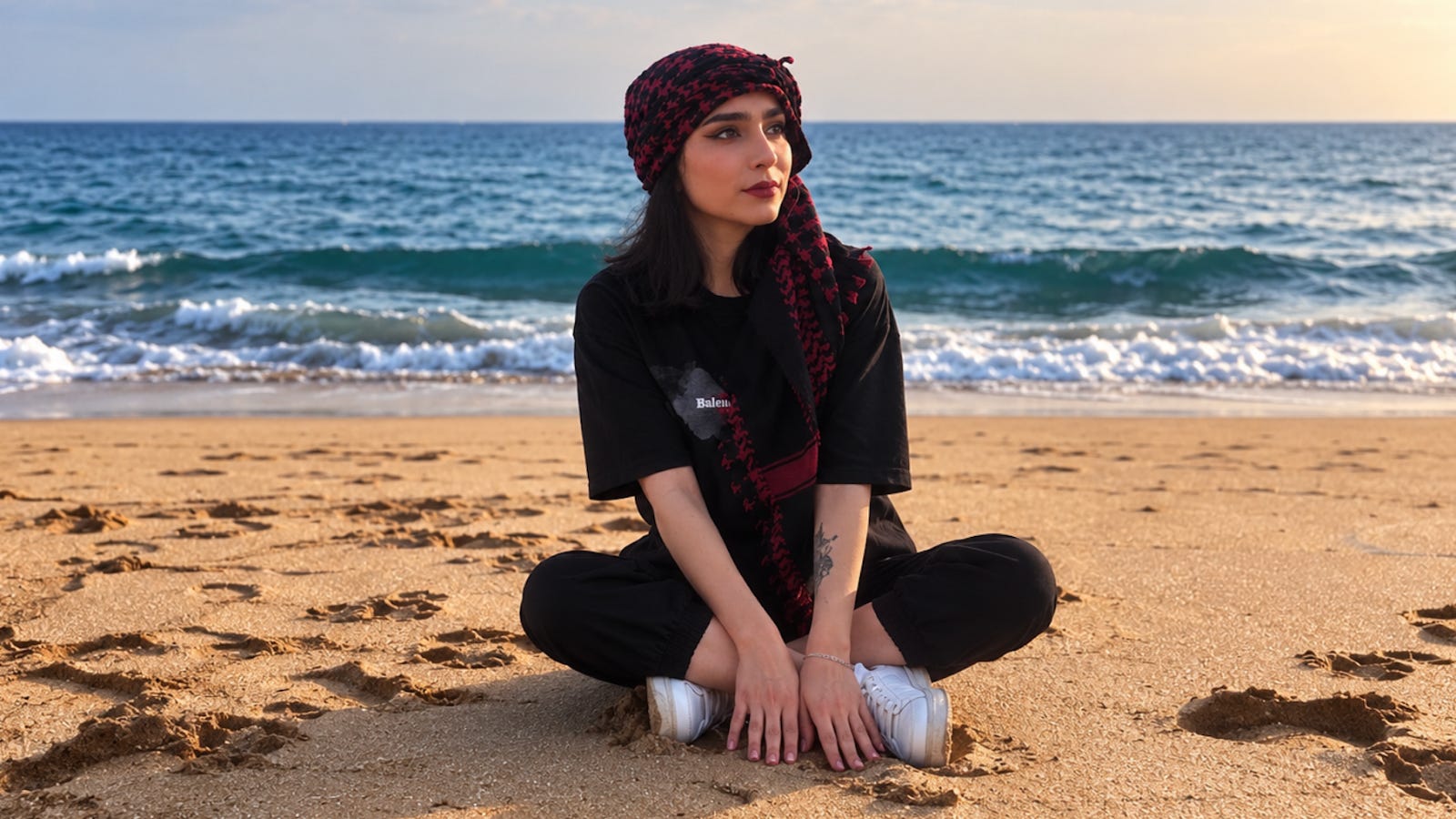
Najmeh Amini, a 23-year-old Iranian accounting student, has been sentenced to death for “blasphemy” over a social media post authorities deemed insulting to the Prophet Muhammad. Her case comes amid escalating repression in Iran and a growing number of politically motivated death sentences.
Sentencing people to death for alleged “blasphemy” is a flagrant violation of international law, a fundamental assault on freedom of expression, and an appalling abuse of state power.
Branch 6 of the Khorasan Razavi Province Criminal Court, presided over by Judge Javad Asiyan Yazd, convicted Amini of sabb al-nabi (insulting the Prophet Mohammad) and sentenced her to death. In a separate case, the Mashhad Revolutionary Court sentenced her to more than 12 years in prison on political charges, including “acting against national security” and “propaganda against the regime.”
Iran is one of the world’s leading executioners, second only to China. According to Amnesty International, at least 2,159 people were executed in Iran in 2025. Most executions in Iran are carried out for alleged offenses that are not punishable by death under international law.
Since the start of 2026, Iranian authorities have escalated their use of politically motivated executions, with at least 34 protesters executed in connection with the January protests. In the first eight months of 2026, at least 1,008 executions have been recorded, according to the Abdorrahman Boroumand Center. However, because approximately 90% of executions in Iran are not officially announced by the authorities, the actual number is believed to be significantly higher than documented figures.
Amini was arrested by security forces at a shopping center in Mashhad following online monitoring by Iran’s Cyber Police (FATA). She is among more than 53,000 people who were arrested during the nationwide protests, according to HRANA.
In an audio message from Mashhad Central Prison, Amini appealed to the international community, lawyers, and human rights organizations to review her case and help secure her right to a fair trial.
Greetings to the people of Iran.
I am Najmeh Amini, 23 years old. I am leaving you this message from Mashhad Central Prison on September 18, 2026.
After eight months of uncertainty, I was sentenced to death on September 16, 2026, at the Revolutionary Court’s Criminal Division, Branch 6, by the ruling of Judge Asiyan.
Today I don’t want to make myself a hero. I want only one thing: be my voice.
I am an innocent girl. A young person with so many hopes and dreams. I have a mother and father who are waiting for me, a family who spend every night afraid of losing me until morning comes.
I don’t want the last thing left of me to be a few lines in this case file. If my voice reaches outside this prison, don’t just hear it for a few moments and then forget it. All I want is justice and a chance to defend myself.
I ask lawyers, legal scholars, human rights activists, and everyone who listens to the voices of innocent people to examine my case. I ask international human rights organizations and the responsible bodies at the United Nations to hear my voice, and to investigate and follow up on the status of my case.
Remember my name. Perhaps I won’t be able to speak anymore. But as long as I am alive, I have one hope: that before the rope becomes the end of my life, I will see a free and liberated Iran.
Article 262 of Iran’s Islamic Penal Code mandates the death penalty for sabb al-nabi (insulting the Prophet), defined as insulting or falsely accusing the Prophet Muhammad or any other prophet of God.
Article 263, however, exempts defendants who claim their statements were made under duress, through carelessness or mistake, while intoxicated or angry, as a slip of the tongue, without understanding their meaning, or while quoting someone else. Under these circumstances, defendants may instead face up to 74 lashes as ta’zir (discretionary punishment).
Amini’s lawyer argued that her statements were unintentional. At her hearing, Amini reportedly expressed remorse, explaining that she had posted the comments under the influence of hallucinogenic mushrooms consumed with friends. She also cited being impacted by the country’s atmosphere at the time, a reference to the nationwide uprising and the authorities’ bloody crackdown.
According to a local newspaper, the presiding judge challenged her defense, asking why, if she had been under the influence of hallucinogens, she had not instead insulted other people or perceived adversaries of the Islamic Republic, such as the United States or Israel.
The judge’s reported questioning raises concerns about possible political and personal bias, as he appeared more focused on why Amini had not directed her comments at other countries than on meaningfully assessing her defense under Article 263.
Take Action to Amplify Najmeh’s Voice
Send a pre-written automated tweet to officials to demand her release.
Share her story on social media!