

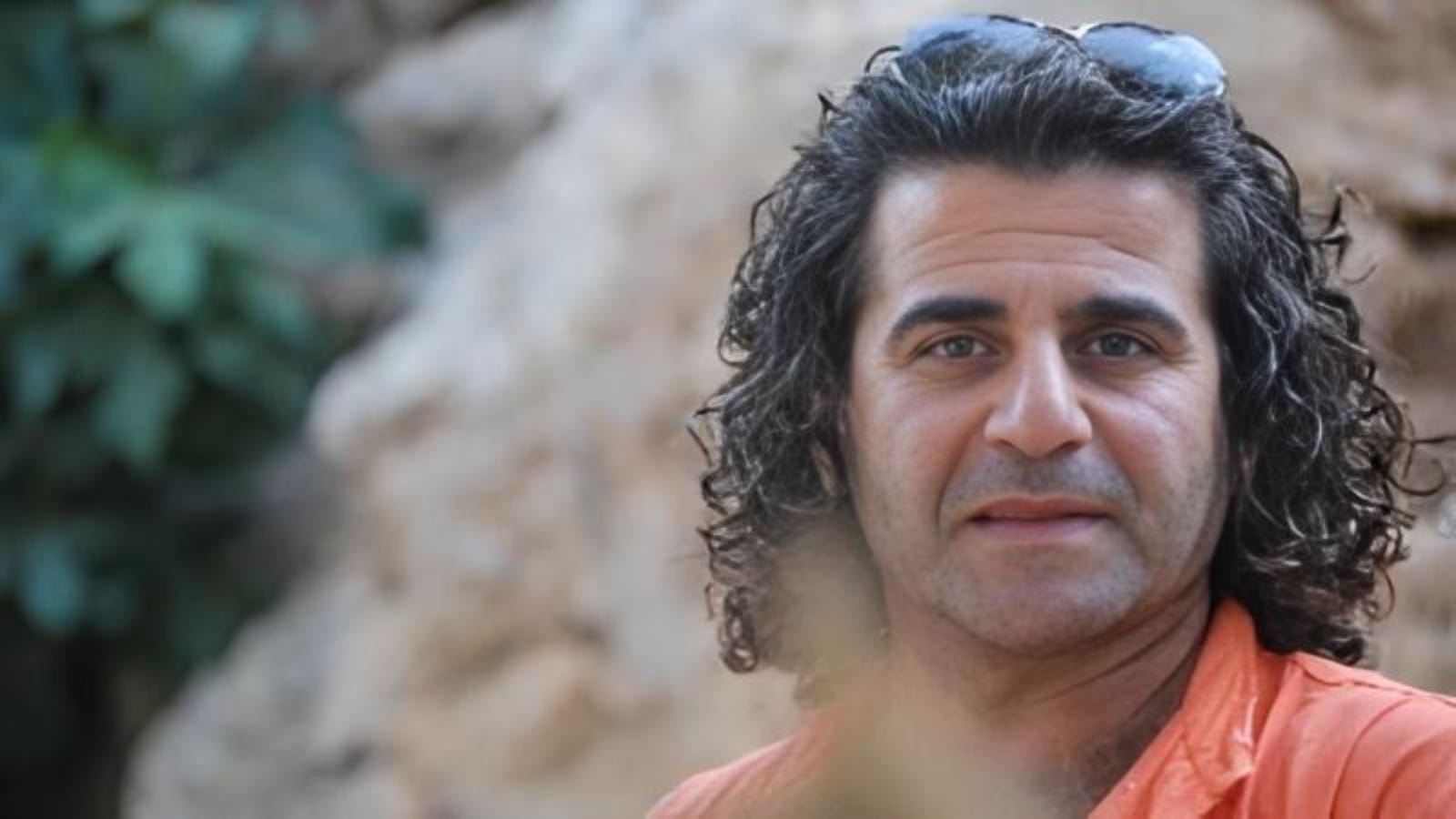
Nasser Saber Bunduq, a Syrian poet, writer, and humanitarian activist, was arrested on February 17, 2014, in a raid on his home by the Assad regime’s Military Intelligence forces. Nasser died in prison 17 days after his arrest, but the Assad regime never notified his family and failed to return his body for burial.
On February 5, 2024, Nasser’s family discovered from the Civil Registry Department’s records that Nasser had died on March 5, 2014. The record did not provide any other details, including the cause of death.
“The story of the martyr poet Nasser Bunduq is an example of the fates of tens and hundreds of thousands of his fellow citizens, who participated in the revolution of freedom and dignity, and whose news vanished in the unknowns of the Assad regime’s terrorism,” said the Syrian Writers Association.
Over the years, the Assad regime never provided any information about Nasser’s whereabouts and condition despite his family making several official requests.
This is a common practice by the Assad regime, whereby detained or forcibly disappeared individuals are registered as dead in civil registry records without any notification to their families.
“Every year, we would go to the civil registry and ask for any records for him, and we always had hope that he was safe and sound. Three days ago, we went to get his records, and they gave us a death certificate dated March 5th, 2014. They deprived his kids of him and took him away from us. They now deprived us of giving him a proper burial among his family,” said a brother of Nasser Bunduq.
“A strong probability that he died due to torture”
Human rights lawyer Jihan Amin, who was arrested in the same neighborhood raid and later released in April 2014, told Nasser’s family that she had seen him in Military Intelligence Branch 227 in Damascus. This was the only information Nasser’s family ever received about him.
His family was kept in the dark by the Syrian authorities for nearly ten years, not knowing if Nasser was alive or dead.
“We can confirm that he was in good health at the time of his arrest, indicating a strong probability that he died due to torture and medical negligence,” says the Syrian Network for Human Rights.
Nasser’s wife, Fariza, told Amnesty International she had heard so many rumors about her husband that she no longer knew what to believe.
“Nasser was an accomplished poet, writer, and devoted father. He was very loved, even by people who would not always agree with him… For me, he was my best friend. He was my husband, but my best friend above all else. His absence has left a void and an unspeakable pain, but we have to continue because that is what he would want,” said Fariza.
During the uprising against the Assad regime that began in March 2011, Nasser participated in peaceful protests and provided humanitarian aid to internally displaced persons (IDPs) in the Damascus governorate. He also worked at the Arab Institution for Media and the Ministry of Information.
The reasons for Nasser’s arrest and forcible disappearance are still unknown, but his family members believe that he may have been arrested due to his participation in the protests.
“We did not think Nasser was in danger of being arrested. He had taken part in some peaceful protests, but when he was arrested, they had slowed down. Also, he was doing well in his job [with the Ministry of Information], and we thought that would protect him,” a close relative told Amnesty International.